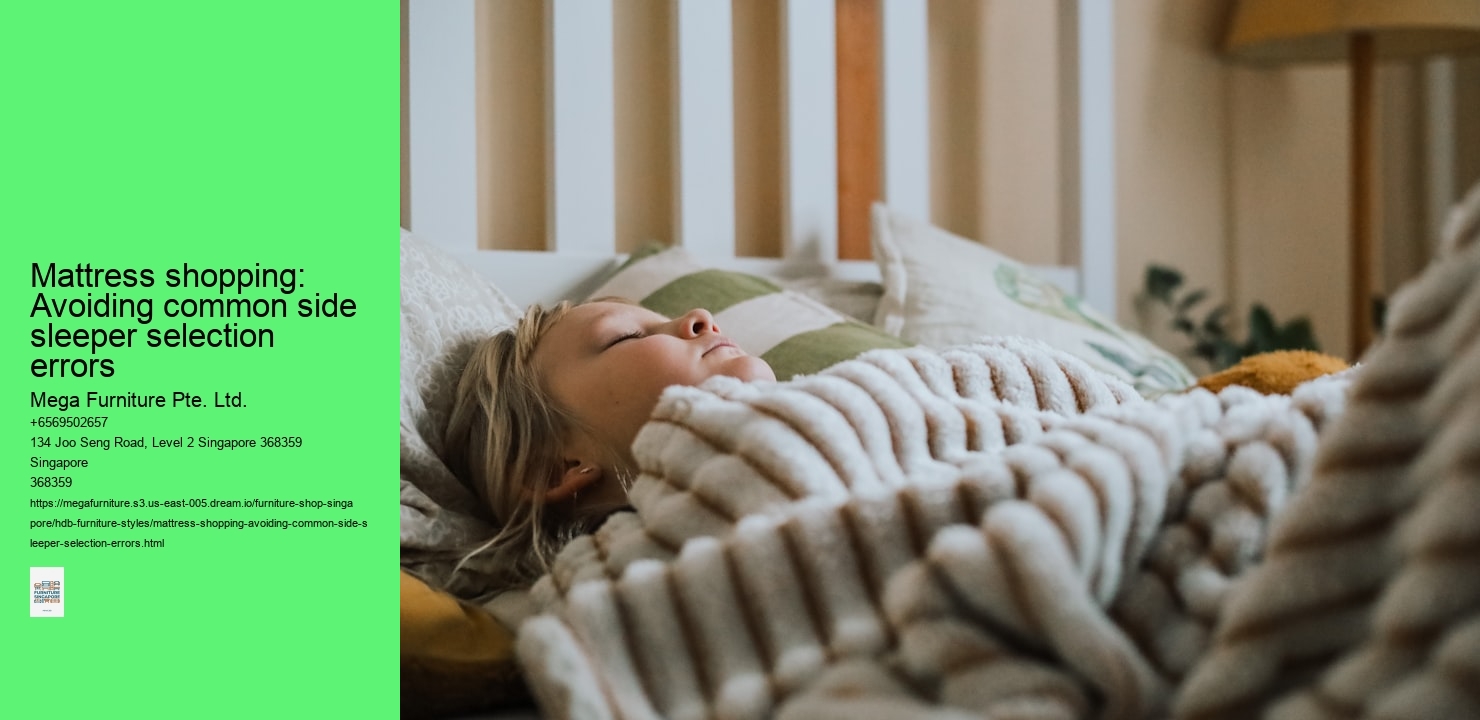
It’s a common scene in showrooms across Singapore. You lie down on a mattress, maybe a Queen size for your HDB master bedroom, and you push your palm into the surface. It feels solid. Firm. You think that’s what good support looks like—something that doesn’t let you sink. For a side sleeper, that’s often where the trouble starts. Your shoulder and hip are the main contact points, pressing into a surface that doesn’t yield. The result isn’t alignment; it’s pressure. You’ll wake up with a numb arm or a sore hip, tossing all night to find a spot that doesn’t ache. That firm mattress you chose for its supposed backbone support is actually fighting your body’s shape.
The key isn’t resistance, it’s accommodation. A mattress for side sleepers needs to cushion those bony prominences, letting them sink just enough to keep your spine in a neutral line. Think medium-soft to medium firmness, with a thicker comfort layer—memory foam or latex—that contours. Your shoulder shouldn’t be propped up; it should be gently enveloped. That’s the shift from a traditional firmness belief to a pressure-relief priority. In a 152 by 190cm Queen bed, that contouring layer is what prevents your hips from tilting and your neck from craning awkwardly.
There’s a practical exception, of course. If you’re a particularly heavier individual, a medium-firm feel might still be necessary to prevent you from sinking too deep and losing all support. But for the majority of side sleepers, including pregnant women advised to sleep on their left side, that softer top is non-negotiable. The goal is to eliminate those pressure points that lead to midnight fidgeting and morning stiffness. You want a bed that feels like it’s holding you, not just holding itself up.
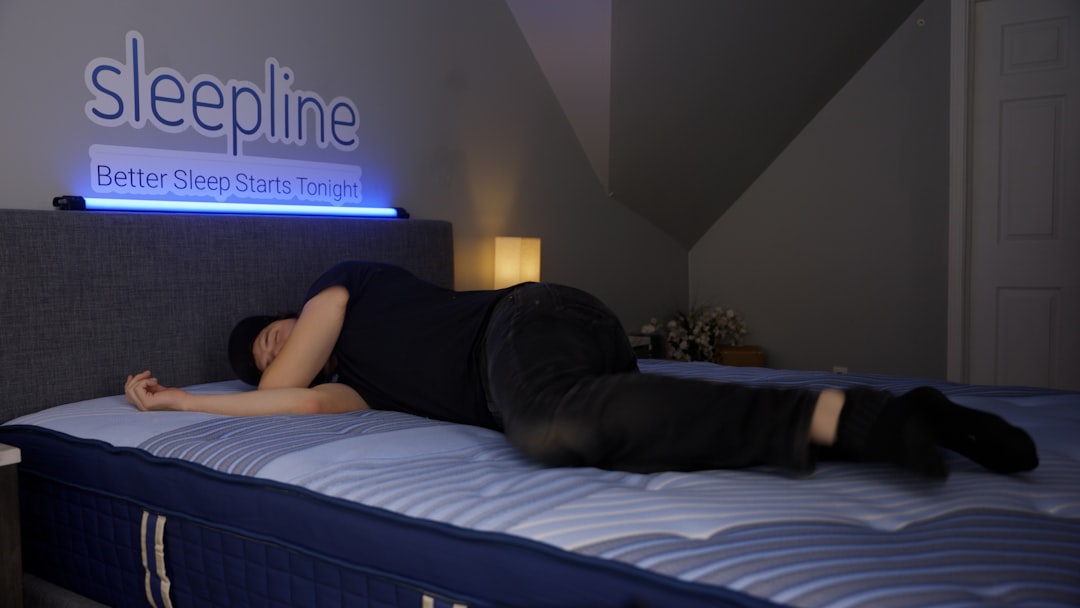
So when you’re testing, ignore that instinct to seek out the hardest surface. Lie on your side and stay there for a few minutes. Pay attention to your shoulder. Is it jammed? Can you feel the mattress conforming around it, distributing the weight? That’s the test. A good mattress for side sleepers won’t leave you battling for comfort; it’ll simply provide it, night after night, without you having to think about it.
There’s a common moment in a showroom when a buyer presses their palm flat onto a mattress and declares it’s “firm enough.” They’re checking for a flat, hard surface, but that’s exactly where the mistake starts. For a side sleeper, that uniform firmness is a problem—your shoulder and hip need to sink in a little, not fight against a rigid plane. Your spine isn’t a straight rod; it has curves, and in a 3-room BTO master bedroom, the mattress has to accommodate them, not ignore them.
Think about the pressure points. When you lie on your side, your shoulder and hip bear the bulk of your weight. A surface that doesn’t contour will push back against those bony areas, forcing your spine to bend sideways to find relief. That’s how you end up with a stiff neck or a sore hip in the morning. The goal is neutral alignment, where your spine rests in its natural, gentle S-curve from head to pelvis. A flat mattress can’t deliver that.
That’s where the comfort layers come in. Materials like memory foam or latex are designed to respond to your shape. They’re not just soft; they’re responsive. They allow your shoulder to depress slightly while still supporting the rest of your torso, keeping everything level. It’s a subtle cradle, not a deep sinkhole. For most side sleepers, a medium-soft to medium firmness with these thicker contouring layers is the sweet spot. Anything harder is a compromise you’ll feel every night.
The only time I’d steer away from this is if you’re a combination sleeper who spends a significant portion of the night on your back. Then, you might need a firmer core beneath that contouring layer to prevent your hips from sinking too far. But for the dedicated side sleeper—and that includes pregnant women advised to sleep on the left—ignoring contour for a flat surface is a sure way to buy a mattress that fights your body instead of supporting it.
A mattress for side sleepers relies on softer comfort layers to cushion shoulders and hips. Materials like memory foam or latex, with sufficient thickness and density, contour to the body to relieve pressure points. These layers must be paired with a supportive core to maintain spinal alignment across the night. The build quality of these material layers directly determines long-term comfort and support for the sleeper.
You’ve chosen a sleek, low-profile platform bed, maybe with drawers underneath for that 4-room BTO master bedroom. The budget spreadsheet looks good, and you’re ready to order. But the mattress you need for side sleeping, with its thicker memory foam or latex comfort layers, often pushes past 25cm in height. That elegant frame you picked might not accommodate that depth at all, leaving a gap between the mattress top and the frame edge. It’s a visual mismatch and a practical headache, especially when you’ve already committed funds to the furniture piece itself.
A mattress over 25cm tall demands deep-pocket sheets, which aren’t the standard option you’d find easily. Standard sheets, designed for thinner mattresses, will simply not fit—they’ll pop off the corners every night. This means an extra, unplanned purchase after your main bed investment. In Singapore’s humid climate, finding sheets that fit snugly also matters for comfort; a loose sheet is annoying to tuck back in. It’s a small but recurring frustration that adds to the overall cost.
In a compact condo bedroom or a typical HDB layout, every centimetre counts. A thick mattress on a standard frame can make the bed feel disproportionately tall, altering the room’s proportions. It might even reduce the usable space beside the bed, where you need that ~60cm clearance for moving around. The higher sleeping surface can also change how other furniture, like bedside tables, relates to the bed. You end up with a room that feels differently organised than you planned.
The post-purchase expenses are what sting. Beyond the specialised sheets, you might need a different mattress protector or even a new bed base if the frame truly isn’t compatible. Some frames have a lip or a border that a thick mattress simply won’t settle into properly. Then there’s the potential need for a different bed skirt or valance to cover the now-exposed gap. These aren’t one-off buys; they’re additions that keep adding to the initial budget you thought was final.
The smart move is to consider the bed as a single system—frame and mattress together, from the start. Measure the internal cavity of any frame you’re eyeing and compare it to the mattress specifications you’re considering for side sleeping. Account for the total height, including any topper you might add later. This holistic approach avoids the piecemeal budgeting that leads to surprise spending. Only one exception exists: if you’re committed to a very specific, low antique frame, then you must deliberately choose a thinner mattress model, accepting that trade-off for the aesthetic.
Singapore’s humidity hovers around eighty percent most months, and that number isn’t just a statistic—it’s a material test. For side sleepers, who need softer layers to cradle shoulders and hips, the wrong foam can turn a pressure-relieving haven into a sweaty, sticky trap. Memory foam, especially the traditional dense varieties, absorbs heat and moisture like a sponge, leaving you feeling clammy and disrupting the very comfort you bought it for. That west-facing flat you love for its afternoon light? It amplifies the problem, baking the mattress surface and making non-breathable materials feel even more oppressive.
Natural latex is the clear winner in this climate. It’s inherently breathable, with an open-cell structure that lets air circulate and moisture evaporate. Gel-infused foams, while not a perfect natural solution, also work by dispersing heat away from the body’s contact points. Both options maintain the necessary medium-soft to medium firmness that keeps a side sleeper’s spine aligned without sacrificing climate suitability. You’ll notice the difference on those humid monsoon nights when every other surface in the room feels damp.
The exception is if your bedroom is exceptionally well-ventilated, perhaps with a ceiling fan running constantly and an air-conditioner on a dry mode schedule. In that controlled environment, a high-quality, lower-density memory foam might still perform. But for the typical HDB bedroom, where airflow is limited and the air itself feels thick, betting on a breathable core is the safer long-term investment. A mattress that can’t handle our weather won’t maintain its supportive properties either; moisture can degrade materials over time, leading to premature sagging in those critical shoulder and hip zones.
So, when you’re testing a mattress, think beyond the immediate pressure relief. Press your hand firmly into the comfort layer for a minute, then lift it away. Does the surface feel cool and dry, or warm and slightly damp? That simple test tells you more about a material’s performance in a 4-room BTO during the June humidity than any spec sheet. Aligning your spine is one goal; aligning your mattress with Singapore’s climate is the other, and you can’t have one without the other.
Most people spend about two minutes on a mattress in a showroom. They lie flat, maybe bounce a bit, and decide. That’s a recipe for waking up sore. For side sleepers, the real test doesn’t start until you’ve settled into your natural sleeping position and waited. Your shoulder and hip need time to sink into the comfort layer, and your spine needs to find its line. Fifteen minutes is the bare minimum for that to happen.
Think about it. When you first lie down on a memory foam or latex model, the surface feels firm. It’s only after a few minutes that the material warms and contours, allowing those pressure points to relax. If you cut the test short, you’re judging the initial feel, not the supportive cradle you’ll actually experience night after night. That medium-soft to medium firmness range is crucial—too firm, your shoulder gets jammed; too soft, your hip sinks too far and your spine curves.
So commit to the side-lie. Don’t just perch on the edge. Get fully onto the mattress, pillow under your head, legs relaxed. Let your body weight distribute. Notice if there’s a pinch at the shoulder or an uncomfortable push at the hip. A good mattress will allow a gentle sinkage that relieves pressure without letting you feel like you’re falling through. Your spine should feel like a straight, supported line from your neck down to your hips. That alignment is what prevents morning aches.
The exception? If you’re a combination sleeper who starts on your side but rolls onto your back halfway through the night. In that case, you’ll want to test both positions for the full duration. But for the dedicated side sleeper—and that includes pregnant women advised to sleep on the left—the fifteen-minute side test is non-negotiable. It’s the only way to know if a mattress will work for you, not just feel okay for a moment.
The search history tells you everything. When a Singapore side sleeper hits Google, it’s not some generic ‘best mattress’ query. It’s shoulder pain, pregnancy, HDB bedrooms, and that nagging worry about a mattress that’s too soft. These aren’t idle curiosities—they’re the real pressure points people carry into the showroom.
Can you use an orthopedic mattress for side sleeping? You can, but it’s a gamble. Orthopedic models are built for firm support, often too rigid for the shoulder and hip relief a side sleeper needs. The exception is a hybrid design with a softer top layer, but that’s a specific find, not the norm. For shoulder pain, you’re better off with a dedicated medium-soft to medium mattress that lets those joints sink just enough without misaligning your spine.
Pregnancy adds another layer. An expecting mum advised to sleep on her left side needs that pressure relief even more, but also stability. A mattress that’s purely soft can feel unstable as the body changes. Look for one with a firmer base layer and a generous comfort section—memory foam or latex works—so there’s contouring without that ‘sinking boat’ sensation. And in a typical HDB common bedroom, a Queen size is the practical choice; a King can overwhelm the space and limit movement, which isn’t ideal when you’re already navigating a new centre of gravity.

How do you know if a mattress is too soft? There’s a simple test. Lie on it in your usual side position. If your hips and shoulders sink deeply but your waist and spine feel like they’re sagging or curving downward, that’s a red flag. You want the mattress to cradle the pressure points while keeping your backbone in a relatively straight line. A mattress that feels wonderfully plush at first touch might leave you with a stiff back by morning. That’s the counterintuitive bit—sometimes the right support feels slightly firmer than you’d instinctively choose.
You sink into a mattress that’s wonderfully soft, shoulders and hips melting into the foam. But after a few hours, you wake feeling stiff—your spine has dipped into a trough, pulled out of line by a core that couldn’t hold its own. That’s the classic side sleeper’s trap: chasing pressure relief and forgetting the support underneath.
For anyone sleeping on their side, especially in a resale flat where the bed might be your only real sanctuary, the goal is a medium-soft feel. You need that top layer to cushion the bony points—shoulder, hip, even the side of a knee. A thicker comfort layer of memory foam or latex does that job, contouring around you. But if the mattress’s core is too soft, it’ll let your whole midsection sag. Your spine ends up curved, and that’s where morning aches creep in, even if the surface felt cosy at first.
The trade-off isn’t actually a compromise; it’s a specific construction. Look for a mattress where the comfort layer is generous enough to cradle, but the support layer below—often a denser foam or a set of coils—is firm enough to prevent hammocking. Your body should rest *on* the mattress, not sink *through* it. In a typical Queen size, that balance means you won’t roll into your partner’s dip over time, and your alignment stays steady through the night. The one real exception? If you’re particularly light, you might find a truly medium-soft mattress still feels too firm because you don’t compress the top layer enough to engage the support. For most, though, that underlying structure is non-negotiable.
It’s a detail you can’t judge by a quick lie-down in a showroom. You need to spend a full ten minutes on your side, feeling whether your spine stays roughly neutral. Don’t just focus on the immediate cushioning; pay attention to whether your lower back feels suspended or supported. That’s the difference between a mattress that coddles you for a night and one that truly cares for you, year after year.
Walk into a showroom unprepared and you’ll feel it—the dizzying rows, the salesperson’s questions, the pressure to decide on something that’ll be in your bedroom for years. That’s why your final checklist isn’t just paperwork; it’s armour. Start with your room’s actual dimensions, not the floor plan’s optimistic ones. Measure the exact space from wall to wall, accounting for that built-in wardrobe you can’t move. A Queen fits most master bedrooms, but if yours is tighter, a Super Single might be the smarter choice. Remember, you need at least sixty centimetres on one side to get out comfortably—anything less feels cramped.
Your sleeping posture dictates the mattress’s job. For side sleepers, the shoulders and hips sink deepest, so the comfort layer needs to be soft enough to cradle those points without letting your spine sag. That’s a medium-soft to medium firmness range, typically. Your body weight fine-tunes it: lighter frames might prefer a softer feel, while heavier ones need a firmer base to prevent that sinking feeling. Write down your usual position and your weight; it turns a vague preference into a spec.
Set a budget ceiling that includes everything. The mattress price is one thing, but delivery to your neighbourhood—Bedok, Tampines, wherever—adds cost. Free delivery often kicks in around a certain spend, but if your block’s lift door is only ninety centimetres wide, you might face a staircase surcharge. Know your total limit before you start browsing. The only time I’d suggest bending this rule is if you discover a mattress that perfectly solves a chronic pain issue—then it’s worth re-evaluating the entire budget.
With those three items settled—room size, sleep specifics, final budget—your showroom visit changes completely. You won’t be swayed by a fancy display model that’s too firm for your shoulders. You can ask directly about delivery to your estate. You’ll leave with a decision, not just a headache.